Introduction: The Hidden Threat in Every Textile Mill
Every textile mill generates dust. Cotton fibers, synthetic fly, and fine particles fill the air during spinning, carding, and nonwoven production. This dust is more than a nuisance. It harms workers' health, damages machines, and contaminates products. Therefore, a well-designed textile mill dust collection system is essential. It protects people and equipment while improving product quality. This guide explains how textile mill dust collection systems work. It also covers selection criteria and maintenance practices.


Why Every Textile Mill Needs a Dust Collection System
Dust creates three major problems in a textile mill. First, it poses health risks. Fine particles can cause respiratory diseases in workers. Second, it damages machinery. Dust settles on bearings, electrical panels, and drive belts. This causes overheating, short circuits, and premature wear. Third, it reduces product quality. Contamination on yarn or fabric leads to defects and customer complaints. A proper textile mill dust collection system addresses all three issues. Moreover, it reduces fire and explosion risks. Cotton dust is flammable, and accumulated dust creates a serious hazard.
Key Components of a Textile Mill Dust Collection System
A complete system has four main parts. The first part is the capture hood. This sits at the dust generation point, such as the carding machine or needle loom. The second part is the ductwork. It transports dust-laden air to the filter unit. The third part is the filter. It separates dust from air. Bag filters and cartridge filters are common choices. The fourth part is the fan. It creates the airflow needed to move air through the system. Each component must work together. Therefore, proper design and sizing are critical for effective dust extraction textile machinery.
Choosing the Right Filter for Your Textile Mill Dust Collection System
Filter selection is a key decision. Bag filters use fabric bags to capture dust. They handle large air volumes and work well for fibrous dust. Cartridge filters use pleated media. They offer higher filtration efficiency in a smaller footprint. However, they may clog faster with sticky or fibrous dust. For most textile applications, bag filters are the standard choice. Additionally, consider the filter media. Polyester works for general dust. Anti-static media prevents spark hazards. Flame-retardant media adds fire protection. Always match the filter to your specific dust characteristics.
Sizing Your Textile Mill Dust Collection System Correctly
Proper sizing determines system performance. You must calculate the required airflow (measured in cubic meters per hour). Each machine has a recommended extraction volume. For example, a carding machine may need 2,000-3,000 m³/h. A needle loom may need 1,500-2,500 m³/h. Add the requirements of all connected machines. Then, add a safety margin of 10-20%. Next, calculate the system pressure drop. This depends on duct length, bends, and filter type. Finally, select a fan that delivers the required airflow at that pressure. Incorrect sizing leads to poor capture, filter overload, or wasted energy.
Maintenance Checklist for Dust Extraction Textile Machinery
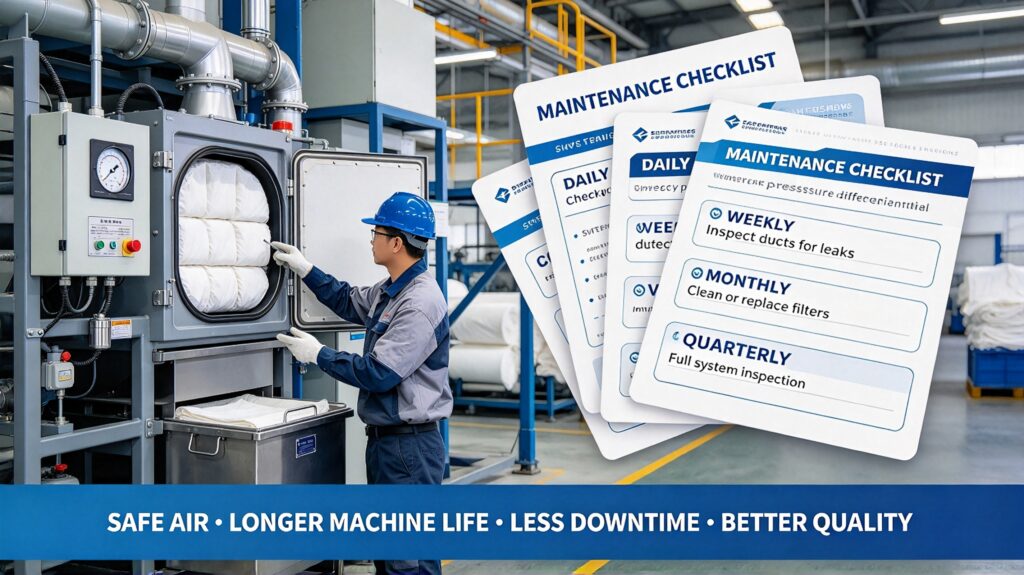
Regular maintenance keeps your textile mill dust collection system running efficiently. Daily tasks include checking the pressure differential across the filter. A rising differential means the filter is clogging. Also, inspect the dust collection bin and empty it when needed. Weekly tasks include checking ductwork for leaks and blockages. Listen for unusual fan noises. Monthly tasks include cleaning or replacing filter bags. Inspect the fan bearings and lubricate them. Quarterly tasks include a full system inspection. Check all hoods for proper capture velocity. Review the entire system for wear or corrosion. A proactive approach prevents unexpected downtime.
Benefits Beyond Compliance
A well-maintained textile mill dust collection system delivers measurable benefits. First, it reduces worker absenteeism and health costs. Second, it extends machine life by keeping critical components clean. Third, it improves product quality by preventing contamination. Fourth, it lowers fire risk. Fifth, it helps you meet environmental regulations. In many regions, dust emission limits are becoming stricter. Therefore, investing in a good system is both a legal necessity and a business advantage. It also supports sustainability goals by reducing waste and energy use.
Conclusion: Breathe Easier with the Right System
Dust is unavoidable in textile manufacturing. However, its negative effects are preventable. A properly designed and maintained textile mill dust collection system protects your workers, your machines, and your products. Start by assessing your current dust levels. Identify the machines that generate the most dust. Then, size and select a system that meets your needs. Finally, commit to regular maintenance. The investment pays back through higher efficiency, lower downtime, and better product quality.
We supply textile machinery and can advise on dust extraction integration for your production line. Contact us to discuss the right solution for your mill.
Ready to improve your mill's air quality? Ask us about dust collection system design and equipment.