Introduction: A Technology on the Move
For decades, needle punch nonwoven fabrics were closely associated with geotextiles. Road construction, drainage systems, and erosion control were their primary markets. However, this is changing rapidly. Today, needle punch nonwoven technology is finding new and growing applications in two high-value sectors: automotive interiors and filtration media. Consequently, manufacturers of needle punch nonwoven lines are seeing fresh demand from these industries. This article explores how needle punch nonwoven fabrics are entering these markets. It also explains why this technology offers unique advantages for automotive and filtration applications.

Why Needle Punch Nonwoven? The Technology Behind the Versatility
Before examining the applications, it helps to understand the process. Needle punch nonwoven fabrics are manufactured by mechanically interlocking fibers using barbed needles. The needles punch through a fiber web at high frequency, typically up to 3,000 times per minute. This action entangles the fibers, creating a dense, uniform, and durable fabric. Importantly, the process uses no chemical binders. It is also highly adaptable. Manufacturers can adjust the fiber type, web weight, and needling parameters to achieve specific properties. Therefore, needle punch nonwoven offers exceptional versatility across diverse end-use markets.
Automotive Interiors: A Growing Market for Needle Punch Nonwoven
The automotive industry is a significant and expanding market for needle punch nonwoven fabrics. The global market for needle-punched nonwovens for vehicles was estimated at USD 1,363.2 million in 2024. It is expected to grow at a compound annual growth rate of 6.50%.
Key Applications:
l Headliners and Roof Liners: Needle punch nonwoven fabrics are widely used for vehicle headliners. They offer an excellent balance of lightweight construction, acoustic insulation, and aesthetic appeal. The porous structure of the material also helps absorb noise, contributing to a quieter cabin environment.
l Carpet Backing and Floor Coverings: Automotive carpets and trunk liners often rely on needle punch nonwoven as a durable backing layer. The fabric provides excellent abrasion resistance and dimensional stability.
l Door Panels and Side Trim: Interior door panels and side trims benefit from the structural support and cushioning properties of needle punch nonwoven fabrics.
l Acoustic Insulation: Reducing noise inside the passenger cabin is a priority for automakers. Needle punch nonwoven fabrics are used in floor coverings, package trays, and luggage compartments to absorb and dissipate sound. Studies have shown that multi-layer needle-punched structures can achieve a maximum sound absorption coefficient of 0.97.
l Wheel Arch Liners and Underbody Panels: Specialized variants of needle punch nonwoven are used for wheel arch liners and underbody panelling. These variants are often water and oil-repellent, flame-retardant, and temperature-resistant.

Why Automakers Choose Needle Punch Nonwoven:
The advantages are clear. Needle punch nonwoven fabrics are lightweight, which helps improve fuel efficiency. They are durable and cost-effective. They also offer excellent sound absorption and thermal resistance. Furthermore, they can be engineered to meet strict automotive safety standards, such as flame retardancy requirements. These properties align perfectly with industry trends toward sustainability and noise reduction.
Filtration Media: A High-Value Application for Needle Punch Nonwoven
Filtration is another rapidly growing market for needle punch nonwoven technology. The global nonwoven filter media market is forecast to reach USD 12.2 billion in 2032 from USD 7.6 billion in 2025. Needle-punched felts form a significant part of this market.
Key Applications:
l Air Filtration: Needle punch nonwoven felts are widely used in industrial dust collection systems, baghouse filters, and air intake ducts. The dense, porous structure of the fabric captures dust particles efficiently while maintaining good airflow. For automotive applications, needle-punched nonwovens are used in cabin air filters.
l Liquid Filtration: In liquid filtration, needle punch nonwoven felts are used for solid-liquid separation in industries such as chemical processing, mining, metallurgy, and pharmaceuticals. The fabric's high strength and chemical resistance make it suitable for demanding environments.
l High-Temperature Filtration: For applications involving high temperatures, needle-punched felts can be manufactured from specialty fibers like aramid and PTFE. These materials maintain their filtration performance even in extreme heat.

Why Filtration Manufacturers Choose Needle Punch Nonwoven:
The answer lies in the fabric's structure. Needle punch nonwoven felts offer a dense, three-dimensional structure with high porosity. They provide excellent filtration efficiency and dirt-holding capacity. They are mechanically strong and resistant to wear. Moreover, the needle-punching process allows precise control over the fabric's density and pore size. This enables manufacturers to tailor the filter media to specific applications. Consequently, needle punch nonwoven has become a preferred choice for both air and liquid filtration systems.
Market Trends Driving Growth
Several trends are driving the expansion of needle punch nonwoven into these markets.
Environmental Regulations: Stricter regulations on vehicle emissions and noise reduction are prompting automakers to adopt advanced materials like needle punch nonwoven. Similarly, tighter air quality standards are increasing demand for high-performance filter media.
Lightweight Construction: Reducing vehicle weight is essential for improving fuel efficiency. Needle punch nonwoven fabrics offer a lightweight alternative to traditional materials.
Sustainability: The growing use of recycled and bio-based fibers in needle punch nonwoven production aligns with sustainability goals. The process itself is chemical-free, making it an environmentally friendly option.
Infrastructure Investment: Global infrastructure projects continue to drive demand for geotextiles. However, the same lines that produce geotextiles can often be adapted to produce automotive and filtration fabrics. This flexibility makes investment in needle punch nonwoven lines particularly attractive.
Conclusion: A Versatile Technology for Growing Markets
The needle punch nonwoven industry is undergoing a significant transformation. While geotextiles remain a stable and important market, new opportunities are emerging in automotive interiors and filtration media. These high-value applications are driving investment and innovation in needle punch nonwoven production lines. For manufacturers, this represents a compelling opportunity. A single needle punch nonwoven line can serve multiple markets. It can produce geotextiles for infrastructure projects, automotive fabrics for vehicle interiors, and filter media for environmental protection. This versatility is a powerful advantage in today's dynamic business environment.
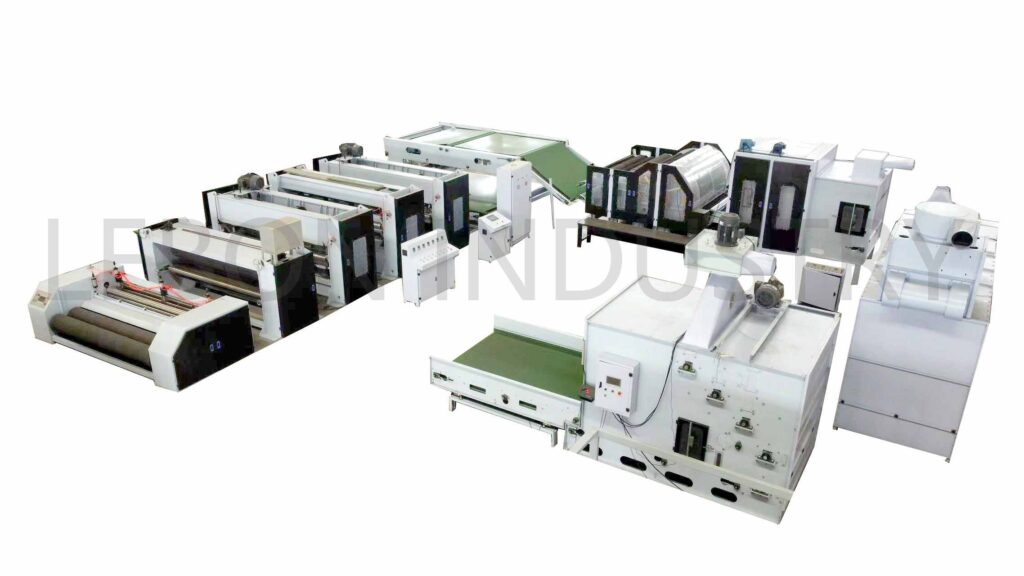
We design and manufacture high-performance needle punch nonwoven production lines. Our equipment is engineered for flexibility, allowing you to serve diverse end-use markets. We can help you configure a line that meets the specific requirements of automotive and filtration applications.
Ready to expand beyond geotextiles? Contact us to discuss your needle punch nonwoven production needs.